
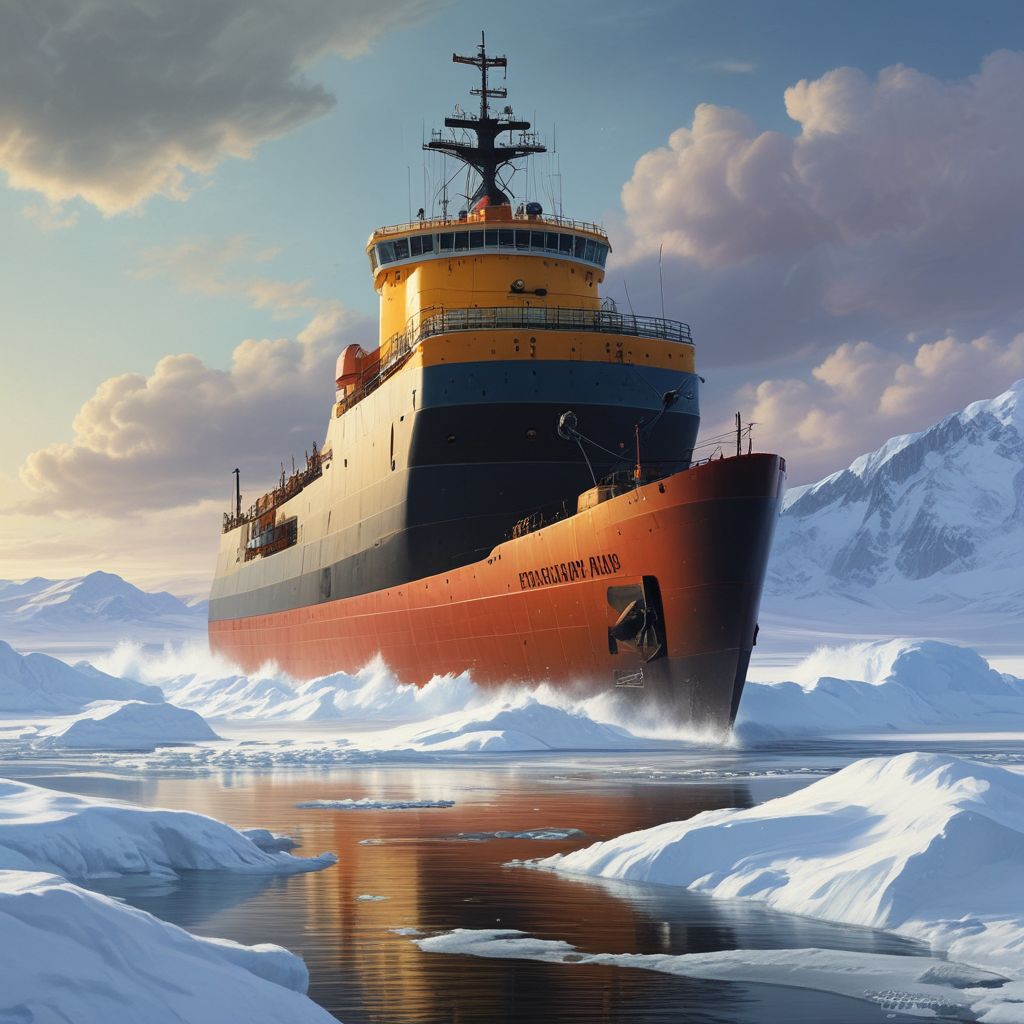
China develops nuclear-powered icebreaker for Arctic transport and tourism
China State Shipbuilding Corporation (CSSC), the world’s largest shipbuilder, has introduced a conceptual design for a nuclear-powered multi-role icebreaker that combines cargo and passenger capabilities. Designed by the Marine Design and Research Institute of China, a CSSC subsidiary based in Shanghai, the vessel—still unnamed—will operate in polar environments, particularly along emerging Arctic routes. The design has received an ‘approval in principle’ certificate from the Italian classification company RINA, signaling that it meets international safety and engineering standards.
The ship will measure approximately 165 meters in length, 30 meters in width, and displace around 30,000 metric tons of water. It can carry up to 250 people, including 150 polar tourists, and transport up to 300 standard 20-foot containers. Thanks to a modular cargo system, it can also accommodate oversized or irregularly shaped goods. Engineered to navigate extreme cold, the vessel includes insulation, vibration control, and high-standard ventilation and air conditioning systems to maximize passenger comfort during polar expeditions.
A key feature of the design is its nuclear propulsion system, which uses molten salt reactor and supercritical carbon dioxide technologies. These improve energy conversion efficiency and enhance safety compared with traditional reactors. The icebreaker can break through ice up to 2.5 meters thick at 3.7 kilometers per hour. According to CSSC engineers, the ship’s flexibility allows it to serve both logistical and tourism purposes, including seasonal cargo transport, Arctic and Antarctic supply runs, and rescue missions.
Researchers emphasize that Arctic routes can reduce voyages between Asia and Europe by as much as 30–40 percent, cutting travel distances by 7,000 kilometers and saving up to two weeks of sailing time compared with the Suez Canal route. This hybrid icebreaker is therefore positioned not only as a technological milestone but also as a strategic asset in the future of global shipping and sustainable polar exploration.