
Platform Engineering vs. Site Reliability Engineering: A Detailed Comparison
This article provides a detailed comparison between Platform Engineering and Site Reliability Engineering (SRE), two critical roles in modern DevOps environments. Platform Engineering focuses on building and maintaining internal developer platforms (IDPs) that abstract infrastructure complexity, enabling developers to efficiently deploy and manage applications. The goal is to enhance developer productivity and system scalability by providing tools, services, and environments tailored for development teams.
SRE, on the other hand, applies software engineering principles to operations, ensuring systems are reliable, available, and performant. SREs monitor production systems, respond to incidents, and automate processes to meet service level objectives (SLOs). They focus on maintaining uptime and reliability through monitoring, incident response, and performance optimization.
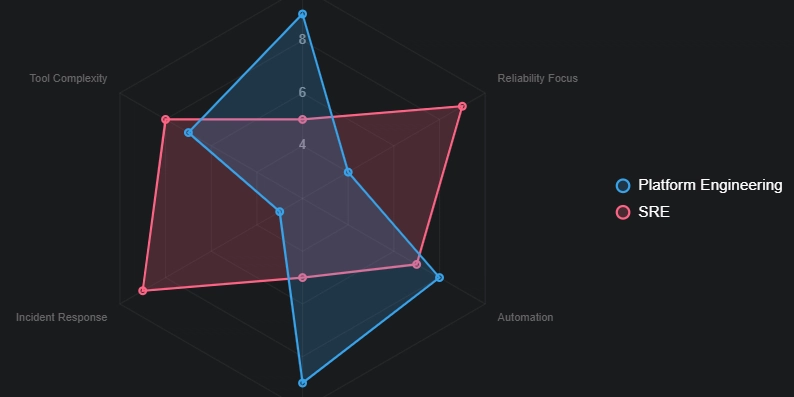
The article highlights key differences in focus, approach, and responsibilities. Platform Engineering is proactive, designing scalable systems, while SRE is reactive, responding to incidents and optimizing performance. Success metrics for Platform Engineering include developer productivity and platform adoption, whereas SRE success is measured by SLIs, SLOs, error budgets, and MTTR.
Both roles utilize various tools, including Kubernetes, Docker, Terraform, Jenkins, Prometheus, Grafana, and ELK Stack. Platform Engineers concentrate on building and configuring infrastructure, while SREs focus on monitoring and optimizing its performance. The required skills for Platform Engineering include system architecture, containerization, and CI/CD expertise, while SREs need strong monitoring, incident response, and performance tuning skills. In essence, Platform Engineering builds the foundation, and SRE ensures its reliability.