
Penn State Scientists Build First Fully Functional 2D CMOS Computer Using Molybdenum and Tungsten Compounds
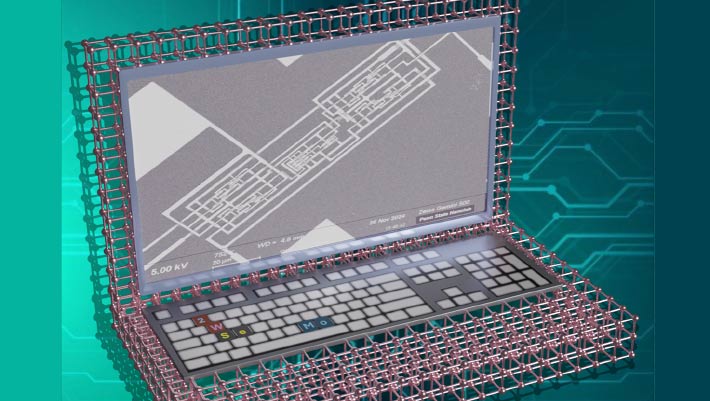
Researchers at Penn State have developed the world’s first computer constructed entirely from two-dimensional (2D) materials, moving beyond traditional silicon-based technologies. Using molybdenum disulfide (MoS₂) and tungsten diselenide (WSe₂) to create n-type and p-type transistors respectively, the team built a complementary metal-oxide semiconductor (CMOS) computer. The computer, although capable only of simple logic operations and operating at modest frequencies of up to 25 kHz, represents a significant milestone in the pursuit of post-silicon electronic systems.
Two-dimensional materials are atomically thin and retain excellent electronic properties at those scales, unlike silicon, which faces degradation as devices are miniaturized. To manufacture the transistors, the team employed metal-organic chemical vapor deposition (MOCVD) to produce large sheets of both 2D materials and then fabricated over 1,000 transistors of each type. By fine-tuning fabrication and post-processing methods, they achieved balanced threshold voltages required for CMOS logic circuits.
This one instruction set computer is not designed for high performance but rather serves as a proof of concept. A computational model was also developed to project its performance and compare it to current silicon-based technologies. The study was published in the journal *Nature* and marks a key step in advancing 2D materials for next-generation low-power electronics.