
Enhancing Battery Performance Through Targeted Atomic Disorder
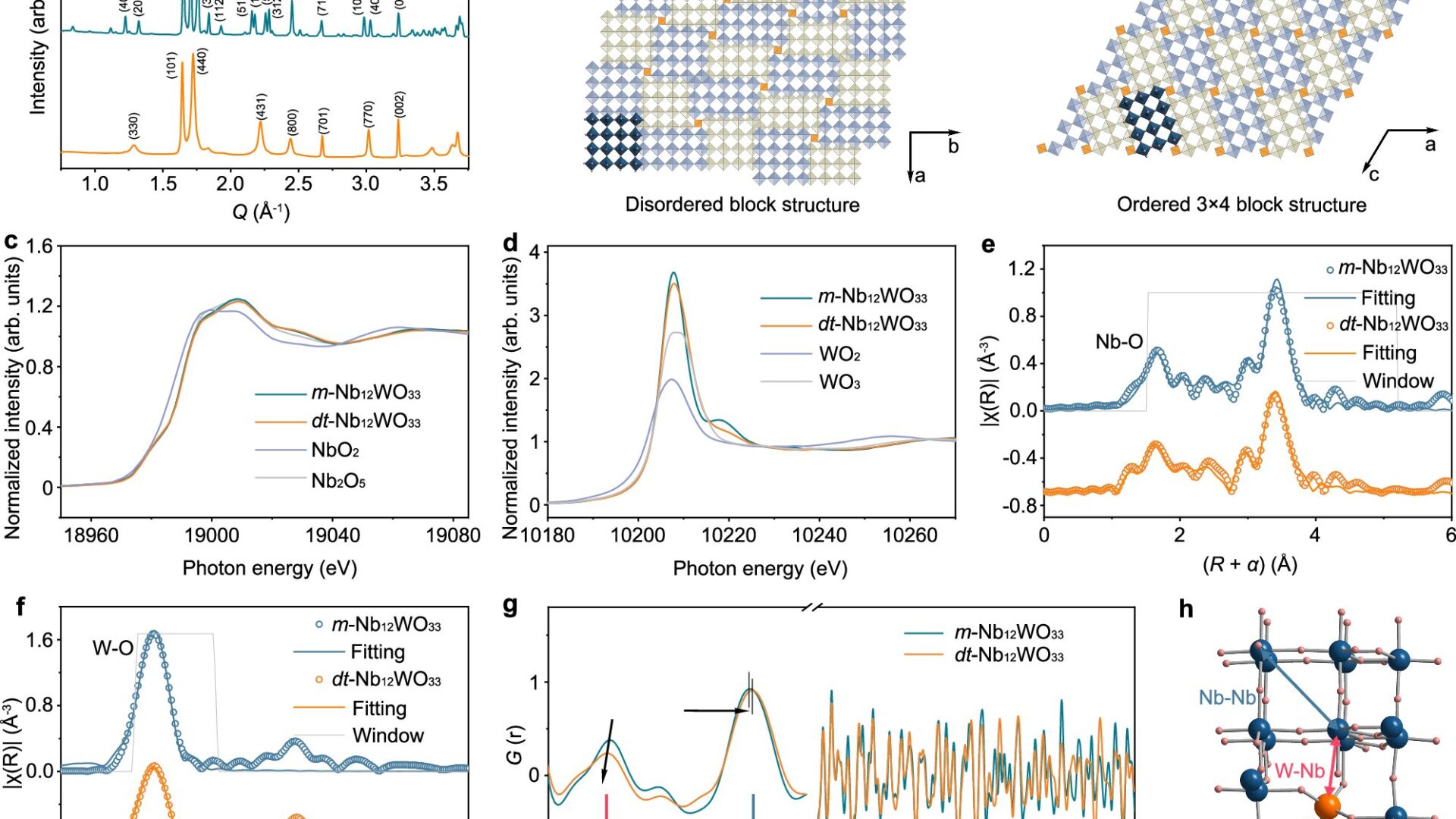
Researchers led by Professor Nicola Pinna and Dr. Patrícia Russo at Humboldt University of Berlin have developed innovative battery anode materials by intentionally introducing atomic disorder. Unlike traditional battery materials, which rely on highly ordered crystal structures, this new approach embraces controlled imperfection to improve ionic conductivity, charge speed, and long-term cycling stability. Their work, published in Nature Communications and Advanced Materials, demonstrates that deliberately disrupting atomic order in niobium-tungsten oxides and iron niobate leads to lithium- and sodium-ion batteries that retain high capacity after extensive use—over 1,000 cycles for lithium-ion and more than 2,600 cycles for sodium-ion batteries. This atomic design strategy paves the way for safer, faster-charging, and longer-lasting energy storage solutions suitable for electric vehicles and renewable energy storage. By challenging traditional notions of material perfection, these advancements highlight the promise of atomic-scale engineering to meet global energy storage challenges more sustainably and effectively.