
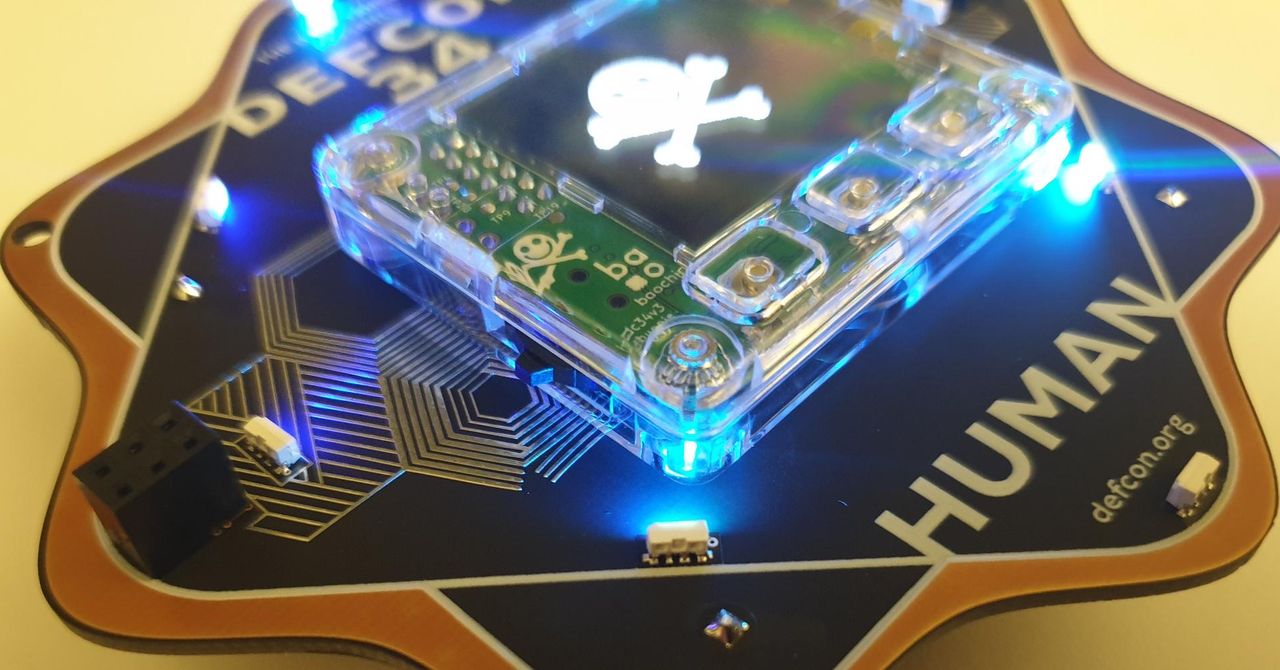
Defcon Badges Introduce a Unique Open-Source Chip with Dual Security Functionality
 The article discusses the integration of an innovative open-source chip into Defcon badges, designed to serve both as a physical security key and a programmable hardware module. Developed through collaboration between Defcon organizers and tech experts, the chip runs a Rust-based operating system with secure boot, a true random number generator, and resistive RAM (RRAM) to enhance security. It features a 350 MHz RISC-V processor, 2 MB of SRAM, and 4 MB of RRAM, positioning it on the edge of running Linux. The chip’s dual functionality as a YubiKey-like security token and potential future use as a hardware security module (HSM) highlights its versatility. The open-source nature invites Defcon attendees to test, hack, and improve the design, ensuring robust security through community scrutiny. While the chip is estimated to withstand attacks costing tens of thousands of dollars, advanced adversaries with substantial resources could potentially breach it. The article emphasizes the balance between innovation and security, showcasing how the chip’s features, such as RRAM, complicate data extraction compared to traditional flash memory. This development underscores the intersection of cybersecurity, open-source hardware, and community-driven technology advancement.