
Venus Aerospace Successfully Tests Rotating Detonation Rocket Engine, Advancing Hypersonic Travel
Venus Aerospace has achieved a milestone in propulsion technology with the successful testing of its Rotating Detonation Rocket Engine (RDRE) at Spaceport America in New Mexico. Unlike traditional propulsion systems that rely on steady combustion, the RDRE generates thrust using controlled supersonic detonations inside a cylindrical chamber. This mechanism produces circulating shock waves that compress and burn unreacted fuel, creating improved efficiency and a higher thrust-to-weight ratio compared to conventional engines. The innovation is not merely technical, but a potential game-changer for hypersonic travel.
In addition to the RDRE, Venus Aerospace revealed progress on the VDR2 air-breathing detonation ramjet engine. This engine uses the aircraft’s forward momentum to compress incoming air, eliminating the need for moving parts and enabling better performance at hypersonic speeds. While ramjets typically require a high initial velocity or booster to activate, Venus Aerospace’s integration of RDRE and the VDR2 into a hybrid design could grant aircraft the ability to take off from conventional runways—something previously out of reach for hypersonic travel systems.
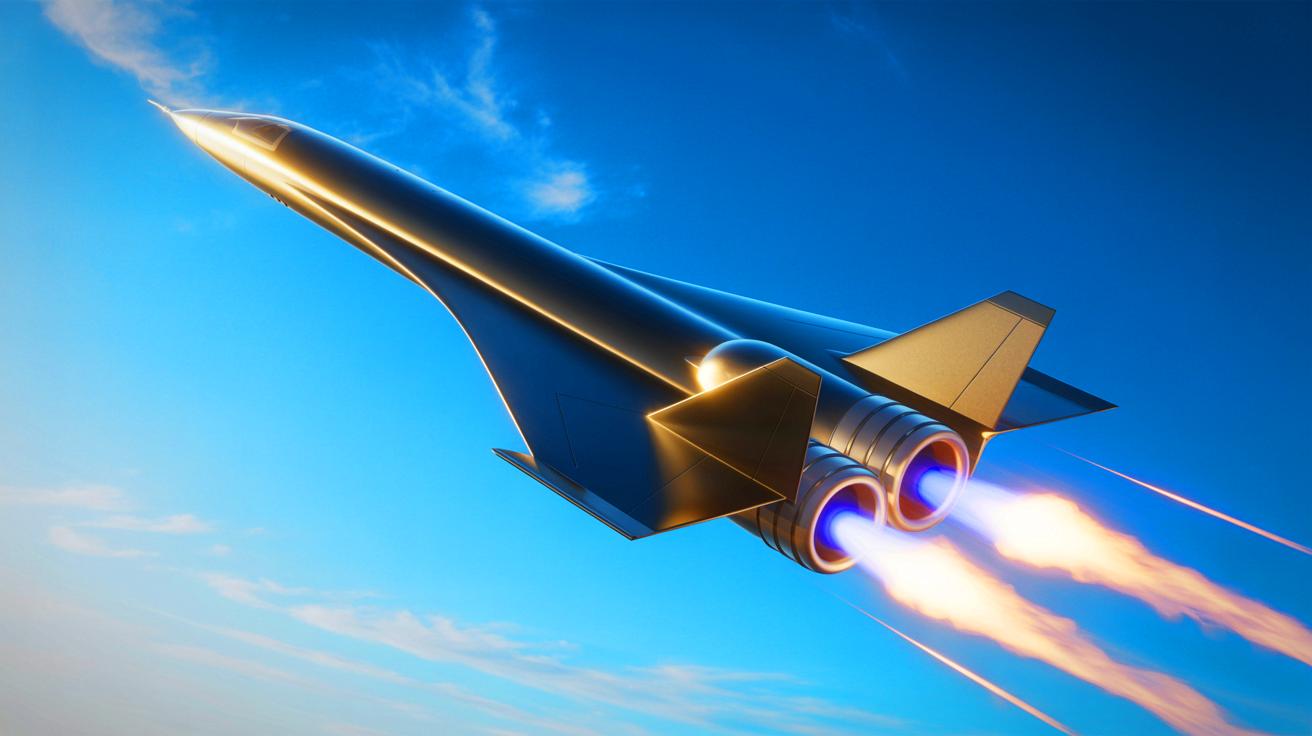
The company’s long-term vision is to develop the Stargazer M4, a Mach 4-capable civilian aircraft, leveraging this propulsion technology. Future phase tests will involve drones to validate the concepts further. Venus Aerospace emphasizes not just speed, but also sustainability and cost-effectiveness, projecting a commercial future where hypersonic travel could become more accessible to the general public. Beyond civilian use, the military applications are equally significant, including rapid deployment and strategic maneuverability.
If successful, this effort could dramatically reduce global travel times while transforming both civilian transportation and defense capabilities. Despite regulatory and engineering hurdles ahead, Venus Aerospace’s recent test represents a turning point in hypersonic propulsion, heralding a potential new era in aerospace innovation and redefining global connectivity.